The post How to Become a Video Game Designer after 12th class first appeared on Education After 12th.
]]>Now, if you are the one who grew up playing Super Mario and GI Joe and 3d games on television and wanted to check out every new game that came on the market and want to create your own concept game with your imagined creativity then you should know what it is all about and how you can be a part of game designing as a Game Designer.
To become a Game Designer, you must get a good knowledge of 2D/3D software as well as pre-production. Usually, in Games, the environment is created in 3DSMax, and Character animations in Maya, Only the models are made with fewer polygons and more textures. So choose a program that teaches you this software. It would not matter whether the program is called a game design program or not. Rest, to become a level designer you must have a passion for game design.
You must have a passion for playing all kinds of games including card games, dice games, sports, etc. May I ask, have you ever designed a game? Finally, to do game programming you would require knowledge of programming which usually a BCA/ MCA would help. If you like this answer you may select it as the best answer or press like.
Career Paths as Game Designer:
The person who designs and devises rules, User interface, and experience for games are known as game designers. They are responsible for the setting and development of stories and characters wireframing of games loaded in computers, the internet, and other respective applications. The duties assigned to the game designer may vary according to the project they are supposed to work on.
There are many creative fields for a talented and passionate person:
| Story Visualizer |
| Environment designer |
| 3D asset creator |
| Game programmer Research and Development |
| Level designer |
| Game designer |
| Game developer |
| Texture Artist |
| Multimedia Developer |
| Interactive Designer |
| 3d Modeler Artist |
| Texture and Lighting Artist |
| Rigging Artist |
| 3d Animation Artist |
There are many types of Games:
| Mobile Games |
| 2d Video Games |
| 3d Video Games |
| Motion Captured Games |
The eligibility requirement to become a Game Designer:
Do you have what it takes to become a Game Designer?
Entry requirements for Pilot training programs vary according to the training location and local regulatory requirements For a career in Pilot you should meet the following minimum entry criteria:
1. Aged over 15 years and above for animation training.
2. INTEREST in creativity, design, and animation.
3. Known the English language.
Career Requirement for becoming a Game Designer and Animator:
| Degree Level | Bachelor’s degree in Multimedia and Animation or Certification in Animation (2 to 3 Years) |
| Degree Fields | Graphics, 2d Animation, 3d Animation, Special Effects, and Multimedia |
| Diploma and Certification | Animation and Multimedia |
| Key Skills | Photoshop, Flash, 3ds Max, Maya, Unity, After Effects, Zbrush |
| Salary | RS 120,000 to 12,00,000 (according to your experience) |
How to become a Game Designer and what are the ways for being a Game design Artist after 12th:
Step 1: Start Sketching Classes in the 10th class and Keep on practicing.
Step 2: Start a bachelor’s degree in Animation Course from a recognized Institute/College/University
or
Step 2: If you do have not any resources to do a degree in Animation/Game Designing then join a certification course in Game Designing and Animation from a recognized Institute and also do Bachelor’s degree from any recognized distance learning university.
Step 3: Start Internship in Animation to get experience.
Training Institute for becoming an Animator and Game Designer:
Institutes for Diploma in Animation and Game Designing Rankings
| 1. Arena Animation, GTB Nagar |
| 2. MAAC Academy |
| 3. Framebox Animation |
| 4. Picasso Animation College |
| 5. TGC Animation |
| 6. ZICA Animation College |
| 7. Oxford Institute |
| 8. IMS-Design and Innovation Academy |
| 9. LISAA School of Design |
| 10. Pickles Animation |
Colleges for Degree in Animation and Game Designing
In India and Abroad there are lots of best colleges where you can learn a Bachelor of Fine Arts (Applied Art and Visual Communication).
| 1. Delhi College of Art, New Delhi |
| 2. Institute Delhi Collage of Art, New Delhi |
| 3. Jamia Milia Islamia, New Delhi |
| 4. Amity School of Fine Arts, Noida-UP |
| 5. Deviprasad Goenka Management College Of Media Studies, Mumbai |
| 6. Lalit Kala Sansthan of Visual and Performing Arts, Agra |
| 7. Sir J. J .Institute of Applied Art, Mumbai |
| 8. ABS-Affinity Business School, Bhubaneshwar |
| 9. SVC-Sri Venkateswara College, Delhi |
| 10. Banaras Hindu University |
| 11. AKM-Abhinav Kala Mahavidyalaya, Mumbai |
| 12. IFA-Institute of Fine Arts |
| 13. College of Fine Arts, Chennai |
| 14. Kanpur University |
| 15. New York Film Academy |
Kind of Software and Production Training provided in Game Designing and Animation Institutes:
Sem 1: Graphic Designing Modules
Adobe Illustrator
Adobe Photoshop
Corel Draw
Adobe Indesign
Sem 2: 2d Classical Animation
classical Animation
Flash
Toonboom
Adobe Premier Pro(Video Editing)
Sem 3: 3d Animation and Special Effects Modules
Modeling and Texturing in 3ds Max
Lighting in 3ds Max
Rigging and Animation in 3ds Max
Special Effects and Dynamics in 3ds Max
Sem 4: Advanced Animation and Visual Effects Modules
Modeling and Texturing in Maya
Lighting in Maya
Rigging and Animation in Maya
Special Effects and Dynamics in Maya
How Much Does It Cost To do Animation and Game Designing Course:
Short-Term Courses: 50,000 to 90,000(In Rupees)
Career Courses(nr About 2-3Years) : 2Lakh to 3Lakh
(Note: fees vary according to the Colleges and Institutes.)
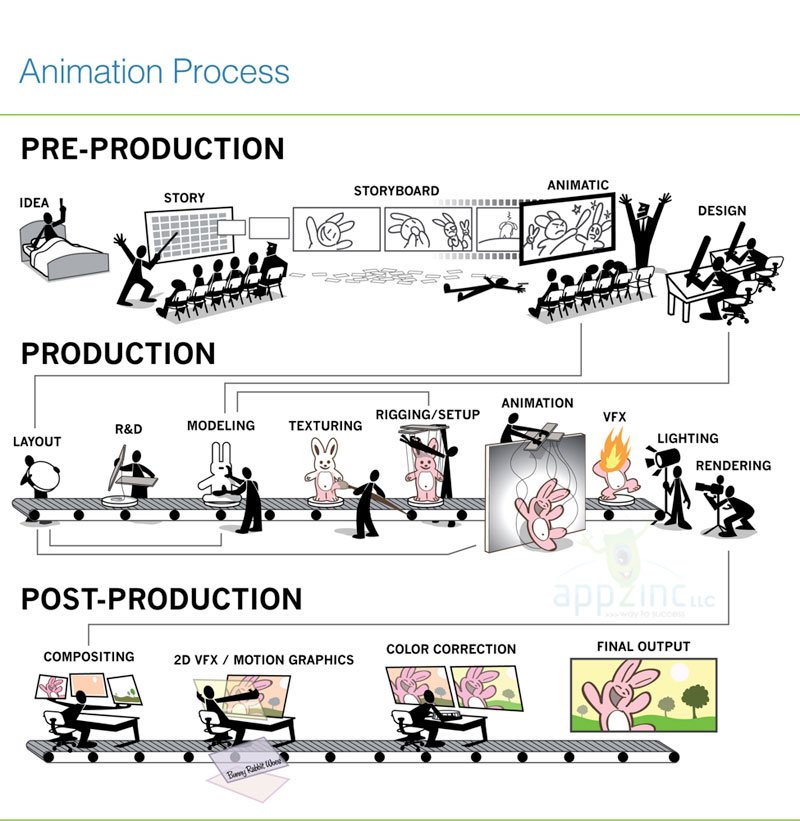
Designing Process step by step:
Top Ten 3d games for the Study of Game Designing:
| 1. PUBG |
| 2. Battlefield Bad Company |
| 3. Tomb Raider Underworld |
| 4. Metro 2033 The Last Refuge |
| 5. Batman Arkham Asylum |
| 6. Mafia 2 |
| 7. Just Cause 2 |
| 8. Need for Speed |
| 9. Lost Planet 2 |
| 10. Call of Duty: Black Ops |
Top Video Game Companies for Game Designing:
| Lakshaya Digital |
| Dhruva Interactive |
| The App Guru |
| Juego Studios |
| Nintendo |
| EA |
| Sony Computer Entertainment |
| Ubisoft |
| Valve |
| Rockstar Games |
| Technicolor |
What are its prospects in the next five years:
The prospects are huge, nowadays gaming is coming like anything. There is a lot of scope over here like Gaming is now used at banks, for marketing, for education, to improve IQ, etc. Mobile gaming, iPhone Gaming, and Social Gaming is the next-gen future. One can start his or her career as a gaming artist, game developer, game taster, game de-coder, porting, etc. Another type of gaming is coming with a lot of scopes, X-Box, Nintendo, and Simulation Games.
Salary Packages after Game Designing Courses:
- For Freshers: 1 Lakh to 1.5 Lakh (per annum)
- For Experienced: 5 Lakh to 12 Lakh (per annum)
Best of Luck 12th Student and Go ahead with Big Dreams 
The post How to Become a Video Game Designer after 12th class first appeared on Education After 12th.
]]>The post Polytechnic Courses After 12th – List of Polytechnic institutes first appeared on Education After 12th.
]]>What is a Polytechnic – Polytechnic is a premier engineering College/Institute and there are many polytechnics in India established in 1962. Polytechnic is affiliated with the Board of Technical Education and the All India Council of Technical Education (AICTE). It has started the Community Polytechnic schematic of the Ministry of Human Resource Development of the Government of India. It provides Diploma and post-Diploma technical education and courses. Many Polytechnics also have dormitories (hostels) for boys, canteen facilities, a gym, and a sports room for recreational activities. It has a history of placing its students in various reputed companies. The Industrial Training and Laison Officer are responsible for arranging campus interviews by prospective employers.
The Polytechnic has staff as per AICTE(All India Council For Technical Education) norms and regulations and AICTE pay scales/service conditions have been implemented. The Polytechnic has implemented the Community Polytechnic scheme of the Ministry of HRD (Government of India) and Stree Shakti Camps are attended by the staff of the Institute
Benefits of studying polytechnic course
- Those who completed the polytechnic course can join engineering courses and can complete them with less expenditure.
- Students who completed the polytechnic course can join directly the second-year engineering course by writing the ESET entrance exam.
- Polytechnic courses will have more practicals and are more application-oriented. This ability will help the students to shine well in industrial companies.
- The subjects that students study in polytechnic will also be there in engineering. The study of engineering will be easy after completing the polytechnic.
- Companies are recruiting diploma-completed polytechnic students rather than engineering students as they leave jobs more frequently.
How to get admission to polytechnic college:
The candidates who want to get admission to the polytechnic college should apply for CET(Common Entrance Test) Delhi 2016 application form, can get their application form, by the last week of March 2016, the last date for submission of the application form will be on the 3rd week of April 2016. The candidates can fill out the Delhi CET application form from the official website of CET. After completing all the details in the application forms candidates have to move toward fee payment. The candidates have got different options for fee payment like net banking, through credit/debit card or they can also pay their fees through bank challan.
Eligibility Criteria for Common Entrance Test:
The candidates who are appearing for the CET Delhi 2016 examination must check all the details of the exam including the eligibility criteria. The eligibility criteria are mentioned in detail below.
The Candidates appearing in the exam should be below 21 years of age for diploma courses and 24 years for 10+2 vocational engineering and ITI passed students.
For those candidates that are applying for Pharmacy courses, the minimum eligibility criteria are passed 10+2 with a minimum of 45% marks (40% in case of reserved category) in the aggregate of Physics, Chemistry Biology, or Mathematics. These subjects are compulsory and candidates must have secured minimum passing marks in these subjects.
For technical courses like Engineering, Architecture, Medical laboratory, and Garment fabrications. The minimum qualification for the students is to pass class 10th with 35% aggregate in Science, English, and Maths.
For the candidates applying for Modern Office Practice (English), the minimum eligibility criteria are passed 10+2 from any stream (having English as a compulsory subject) with a minimum aggregate of 45% (40% in case of reserved category). The candidate must have scored passing marks in English. For Modern Office Practice (Hindi) the candidate should have passed/appeared 10+2 any stream and should have Hindi/Sanskrit as a compulsory subject with a minimum aggregate of 45% (40% in case of candidate belonging to reserved category).
Polytechnic College and Institutes in India :
Government Institution
- Ambedkar Polytechnic
- Aryabhat Polytechnic
- Gobind Ballabh Pant Polytechnic
- Guru Nanak Dev Co-Ed Polytechnic
- Integrated Institute of Technology
- Kasturba Polytechnic for Women
- Meerabai Institute of Technology
- Pusa Polytechnic
- Bhai Parmanand Institute of Business Studies
- Delhi Institute of Tool Engineering
- Vardhman Mahavir Medical College and Safdarjang Hospital
Government aided Institution
- Sarada Ukil School of Art
Privately managed BTE-affiliated institutions
- Aditya Institute of Technology
- Baba Hari Dass College of Pharmacy
- Chhotu Ram Rural Institute of Technology
- Guru Tegh Bahadur Polytechnic
- International Polytechnic for Women
- Marathwada Institute of Technology
- Rao Tula Ram Polytechnic
- Subramania Bharati College of Science & Technology.
Diploma Courses in Polytechnic After 10th Class:
Admission to Diploma Courses through Common Entrance Test (CET)
- Architectural Assistantship
- Automobile Engineering
- Chemical Engineering
- Civil Engineering
- omputer Engineering
- Computer Science and Engineering
- Electrical Engineering
- Electronics and Communication Engineering
- Electronics and Communication Engineering – Industry Integrated
- Electrical and Electronics Engineering
- Electronics (Microprocessor)
- Electronics and Telecommunication Engineering
- Fashion Design
- Garment Technology
- Information Technology
- Instrumentation Technology
- Interior Design and Decoration
- Leather Technology
- Leather Technology (Footwear)
- Library and Information Sciences
- Mechanical Engineering
- Mechanical Engineering (Refrigeration and Air Conditioning)
- Mechanical Engineering (Tool and Die)
- Marine Engineering
- Medical Laboratory Technology
- Plastic Technology air
- Production and Industrial Engineering
- Textile Design
- Textile Processing
- Textile Technology (Spinning)
- Textile Technology (Weaving)
- Textile Technology (Knitting)
Diploma Courses in Polytechnic After 12th Class:
Admission in Diploma Courses Direct Admission – (Not through CET)
Diploma Courses
- Diploma in Pharmacy
- Modern Office Practice
Part-Time Diploma Courses – After 10th with working experience
- Civil Engineering (PTD)
- Electrical Engineering (PTD)
- Mechanical Engineering (PTD)
Post-Diploma Courses – After Diploma in the relevant field
- Post Diploma In Auto And Tractors
- Post Diploma In Cad/Cam
Certificate Courses
- Skilled Technician (Machinist)
- Skilled Technician (Machine Maintenance)
- Quality Assurance Inspector
Salary Packages after Polytechnic Diploma Courses:
For Freshers: 1 Lakh to 1.5 Lakh (per annum)
For Experienced: 8 Lakh to 12 Lakh (per annum)
Best of Luck 12th Student and Go ahead with Big Dreams
The post Polytechnic Courses After 12th – List of Polytechnic institutes first appeared on Education After 12th.
]]>The post Career in Professional ITI Courses in Delhi first appeared on Education After 12th.
]]>what is ITI (Industrial Training Institutes) – ITI is a government Training sector where candidates can join Diploma courses after the 10th or 12th class on a merit basis. It is a vocational training institute in the technical field and formed under the Directorate General of Employment & Training (DGET), Ministry of Labour & Employment, Union Government of India. There are several private and government ITIs offering admission in various engineering and non-engineering programs. The Institute works on providing job-oriented skill training to train the candidates as per the industry-specific task.
There are many branches in India that provide great facilities and training in technical trades. The candidate who has passed the 10th class is eligible for admission to ITI. The course in ITI is designed according to basic skills in the trade specified. The duration, of course, may vary from one year to three years depending upon the trade opted.
Students can join higher studies like a diploma in engineering after completing the engineering trading course in ITI. Specialized short-term courses for certain trades are also offered in Advanced Training Institutes (ATIs) that refine the candidate’s skills. ITI pass-outs are accepted in Many reputed companies as apprentices and they train the candidates for a period of 6 months to 1-2 years. However, the period of training of the candidates may vary according to the probation norms of companies. These candidates can be considered eligible for employment only after the training period. Renowned ITIs and ITCs have formed their own placement cells and companies may recruit directly the candidates after the completion of their trades.
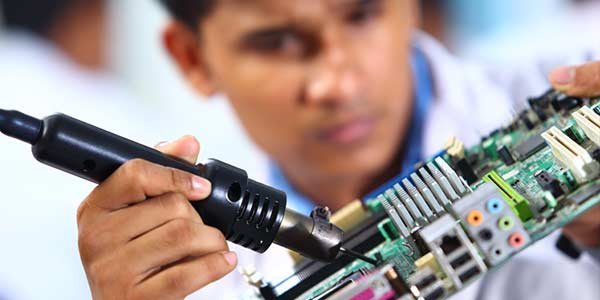
ITI Classes
Scope in Diploma Courses of ITI:
ITI graduate candidates can apply for jobs in either the government or private sector depending on the respective trades they are completed with. Some of the trades like electronics welder refrigeration and air-conditioner mechanic are much in demand. It is worthwhile to mention that electronics is the foundation of almost every field and it has a very good scope. Electronic mechanic trade pass-outs can find job opportunities in IT sectors and in manufacturing companies of electronics equipment. Now ITI Courses After 8th and 10th class will be equal to 10th and 12th Class
There is good scope in both welders and air-conditioner mechanics in India and abroad. Lots of Job openings for A/C mechanics are there in the different sections of the Public Service Commission (PSC) and in railways where they will be placed as instructors or technicians etc.
Fitters can find enormous Job opportunities in onshore and offshore companies such as oil and gas shipyards & factories etc. Candidates having electrician trade can be employed in the electricity board/department for which the recruitment is through PSC (Public service Commission) Exams.
Candidates can also find job opportunities in government organizations like the Indian Army Indian Navy Air force Railways Telecom and paramilitary forces like BSF (Border Security Force) CRPF (Central Reserve Police Force) etc. Last but not least candidates can also be self-employed by setting up their own winding shops garage fabrication shops etc.
A list of ITI courses after the 12th with duration and eligibility are:
Engineering ITI courses:
| Course Name | Duration | Eligibility |
|---|---|---|
| Tool & Die Maker Engineering | 3 Years | 10th passed |
| Draughtsman Engineering(Civil Engineering) | 2 Year | 10th passed |
| Draughtsman (Mechanical) Engineering | 2 Year | 10th passed |
| Fitter Engineering | 2 Year | 10th passed |
| Turner Engineering | 2 Year | 10th passed |
| Information Technology & E.S.M. Engineering | 2 Year | 10th passed |
| Machinist Engineering | 2 Year | 10th passed |
| Refrigeration Engineering | 2 Year | 10th passed |
| Mech. Instrument Engineering | 2 Year | 10th passed |
| Electrician Engineering | 2 Year | 10th passed |
| Wireman Engineering | 2 Year | 10th passed |
| Mechanic Motor Vehicle Engineering | 2 Year | 10th passed |
| Mechanic Radio & T.V.Engineering | 2 Year | 10th passed |
| Mechanic Electronics Engineering | 2 Year | 10th passed |
| Surveyor Engineering, 2 Years | 2 Year | 10th passed |
| Pattern Maker Engineering | 2 Years | 8th passed |
| Mechanic Agriculture | 2 Years | 8th passed |
| Welder (Gas & Electric) Engineering | 1 Year | 8th passed |
| Forger & Heat Treater Engineering | 1 Year | 8th passed |
| Foundry Man Engineering | 1 Year | 10th passed |
| Carpenter Engineering | 1 Year | 8th passed |
| Sheet Metal Worker Engineering | 1 Year | 10th passed |
| Plumber Engineering | 1 Year | 8th passed |
| Diesel Mechanic Engineering | 1 Year | 10th passed |
| Mechanic Tractor | 1 Year | 8th passed |
| Plastic Printing Operator Engineering | 1 Year | 8th passed |
| Pump Operator | 1 Year | 10th passed |
| Motor Driving-cum-Mechanic Engineering | 1 Year | 10th passed |
Non-Engineering courses:
| Courses | Duration | Eligibility |
|---|---|---|
| Computer Operator & Programming Assistant (COPA) | 1 Year | 12th passed |
| Stenography English | 1 Year | 12th passed |
| Stenography Hindi | 1 Year | 12th passed |
| Cutting & Sewing | 1 Year | 8th passed |
| Book Binder | 1 Year | 8th passed |
| Dress Making | 1 Year | 10th passed |
| Secretarial Practice | 1 Year | 10th passed |
| Hair & Skin Care | 1 Year | 10th passed |
| Fruit & Vegetable Processing | 1 Year | 10th passed |
| Embroidery & Needle Worker | 1 Year | 8th passed |
| Bleaching & Dyeing Calico Print | 1 Year | 10th passed |
| The weaving of Fancy Fabric | 1 Year | 8th passed |
| Letter Press Machine Mender | 1 Year | 10th passed |
| Hand Compositor | 1 Year | 10th passed |
| Commercial Art | 1 Year | 10th passed |
| Manufacture Foot Wear | 1 Year | 10th passed |
| Leather Goods Maker | 1 Year | 10th passed |
How to get admission to ITI?
- The candidates can register for online admission from the Official website
- The Candidate has to fill up the Registration form carefully in ENGLISH language only as per the instructions.
- Candidates must keep the following documents ready for uploading at the time of filling out the admission form.
- Photograph
- Qualifying Certificate: 10th certificate showing complete
- Category Certificate (If Applicable)
- Debit card/Credit card/Internet Banking may be used for making a Registration fee of Rs 200 at the time of registration.
- After transaction completion of the fee, candidates’ details are sent for Preliminary online verification. This process may take around two days and the verification status of the candidate would be informed on the registered E-mail of the candidate.
- After verification, the candidate has to be logged in and Fill in trade/ITI choices.
- Candidate needs to fill in the various Trade/ITI choices available as per his/her eligibility in order of preference.
- Thereafter, a tentative rank list will be issued on the basis of Marks. The final rank list will be declared after incorporating the valid correction. The rank must be noted for future reference.
- Thereafter, in the First Round of Counseling, seats will be allotted to the candidates by considering their rank, category, sub-category, and gender as per choice filled by the candidate in preferred order.
Questions and Doubts About ITI Courses after 12th in India
Are both commerce and science streams the same? Can we do ITI after the 12th (Commerce)?
Ans: Science and Commerce are different streams, both are two different paths After the 10th class. There are courses related to science i.e., MPC, and BiPC. The Commerce stream will be related to CEC and MEC. There are various courses in ITI related to electrical, mechanical, electronics, etc.
How to get admission for the ITI course after completing the 12th in Commerce stream?
Ans: You can take admission in ITI course after 12th commerce. you go into the BCA field and create a future in the ITI field and after then you do the MCA field. where you got a good salary in this field. with a bright future.
Which ITI courses are the best choice for me to join after completion of the 12th Class in Commerce stream?
Ans: Dear, the best ITI course for you is given below
1)Computer Operator & Programming Assistant(COPA)
It is a one-year Non-Engg course, which trains you to learn the fundamentals of the computer. Identify and check the validity of data to attain the data entry speed, provide hands-on experience on PC/Micro Comp, Learn computer languages like C, and C++, and Learn various packages supported by PC such as Office Automation (MS. Office, Word, Excel, Powerpoint, etc) and learning basic concepts of networking.
Nowadays there is scope or not in ITI electrical?
Ans: Yes, There is lots of scope as well as lots of competition in Electrical Engineering.
Salary Packages after Courses:
For Freshers: 1.2 Lakh to 1.5 Lakh (per annum)
For Experienced: 2.5 Lakh to 6 Lakh (per annum) according to the field.
The post Career in Professional ITI Courses in Delhi first appeared on Education After 12th.
]]>The post How to become a Commercial Pilot after 12th class first appeared on Education After 12th.
]]>Every Student wants to know how to become a pilot and wants to get a commercial pilot license? There are many pilot training institute/aviation courses to study of the pilot and fulfil your dream in pilot jobs and good salary. There is a wooming scope in aeronautical engineering as a Pilot. You Should Learn about airline pilot training before taking a decision to become a Pilot
A pilot is not a simple career as you have learned “how to drive a car?” You are the one most responsible person for hundreds of lives in a single aircraft or aeroplane. You may need to carry out more than 100 headaches before flying a passenger aircraft or other private jets.
In the term, there are two pilots. The Senior and experienced Pilot is the captain and the second one is the co-pilot. In bigger aircraft, there should be a third pilot too as the flight engineer. However, after the automatic computerized monitoring system, maximum airlines are left with only two pilots. The captain keeps surveillance to other crew members while co-pilot monitoring the system and communicate with the air traffic controllers. The different functions of air pilots are:
- have to Check the aircraft/Jets so to make its smooth functioning.
- To know about the weather condition of all the destinations en route.
- Keep a hawk-eye on speed and use according to instrument flight rules. Instrument flight rule is used during poor visibility to make coordination with air traffic controllers.
- To take almost care during takeoff and landing.
- Helicopter pilots should be careful of transmission towers and power lines.
Career Paths as Pilot:
There are two major career paths to being hired as an airline pilot: civilian or military. Each path has its own advantages and disadvantages:
Civilian
In civilian, we have two options: college or flight school. While there is no college requirement to be a pilot, college shows that you are trainable and can succeed in a challenging curriculum—both of which are necessary traits in a commercial airline pilot. You can choose to attend a college that offers a two- or four-year degree along with flight training towards the various flight certificates you will need. After this, you will need some flight experience.
Civilian flight Pilot training is very expensive. Basic flying lessons of Pilot Training start at about $80 an hour, and you will need at least 250 hours before you receive your commercial rating. It also costs a great deal to rent aeroplanes for instruction.
Military
Second option to become a commercial airline pilot is to receive your Pilot training through the military. You will have to give a commitment to a set number of years in the military Pilot after one year of pilot training (in the Air Force, this is a ten-year commitment). You will need to get other requirements, such as college course work, good health, and adequate physical abilities. There is no guaranteeing that you will pass the military flight training on the service’s rigid time schedule, or that you will be able to fly a specific aeroplane. In Airforce, You will receive the best training in the equipment that an airline pilot would fly and don’t confuse with the job of the pilot of Indian Air Force. IAF pilot is selected through NDA exam, training is free.
You must be prepared for the military life, however; it is not a commitment to take on lightly. You will have to follow orders, risk bodily harm, and use lethal weapons. If you are not able to do this, the military is probably not the best career for you.
The eligibility requirement to become a Pilot:
Do you have what it takes to become an airline pilot?
Entry requirements for Pilot Training programs vary according to the training location and local regulatory requirements and For a career in Pilot you should meet the following minimum entry criteria:
- Aged over 18 years old to commence training
- Completed Secondary School education achieving national qualifications in English Language, Mathematics and Science subjects
- Proficient in the English language
- Capable of holding a Class 1 Pilot Medical Certificate
- Successfully complete and pass the assessment process for your preferred training program
Career Requirement to become a Pilot:
| Degree Level | Bachelor’s degree |
| Degree Fields | Aircraft operations, aviation, aeronautical engineering or related field |
| Training and Experience | Up to 2 months of ground training; more 1500 hours of flight experience |
| Licensure and Certification | Commercial pilot’s license; instrument rating; airline transport pilot certificate |
| Key Skills | Strong communication, problem-solving and observation skills, good depth perception and reaction time, ability to operate aircraft computer and navigation systems |
| Salary | $120,000 per year (2014 median salary for all airline pilots, copilots and flight engineers) |
How to Become a Pilot: Education and Career in Airline Pilot
Step 1: Obtain a Bachelor’s Degree
While a college degree is not always required to get started in this career field, the U.S. Bureau of Labor Statistics (BLS) reports that airline pilots are required to have a bachelor’s degree, which can be in any major. However, aspiring pilots can gain more relevant knowledge by enrolling in an aviation or aeronautics bachelor’s program. Regardless of major, students must complete coursework in physics, aeronautical engineering, mathematics and English. It’s important to enrol in an aviation or aeronautics program that has been approved by the Federal Aviation Administration (FAA).
Step 2: Getting Flight Experience
Aspiring airline pilots are required to complete a certain number of hours of flight training to qualify for licensure. To obtain a commercial pilot’s license, 250 hours of flight time, in addition to 1,500 hours of flight time for an airline transport pilot certificate is required. Flight training can be completed through degree programs or through flying schools approved by the FAA. Airline pilots must also have a minimum of 40 hours of instrument flying experience in-air and through simulation. Instrument flying ratings demonstrate a pilot’s ability to fly in low visibility conditions.
Success Tips:
Find personal flight instructors. Although formal training provides basic education, it usually doesn’t provide enough experience to easily succeed as an airline pilot, according to ALPA. By hiring personal instructors, students have the opportunity to acquire in-depth knowledge.
Join the military. According to the ALPA, many pilots have obtained flying experience through the military. Military pilots also have the opportunity to gain substantial flight experience and are often attractive candidates for airline companies.
Step 3: Getting a Pilot’s License
To obtain a pilot’s license, a minimum number of hours of flight experience must be completed. Individuals are also expected to pass a written exam, demonstrate flying ability and take an instrument flying rating exam. As a part of the pilot’s license stipulations, individuals are required to pass a physical exam, which includes having vision correctable to 20/20, good hearing and no physical handicaps that could interfere with the job.
Step 4: Complete Additional Tests and Training
Many airline companies require pilots to take physical, psychological and aptitude tests, as well as drug tests as a prerequisite for employment. Once hired, pilots are generally required to undergo an additional 6 to 8 weeks of training, including at least 25 hours of flight time. Additionally, most new hires are brought on as co-pilots. It’s also not uncommon for some pilots to start their career at small commuter or regional airline companies. This gives them the opportunity to gain more flying experience before being hired by a major airline.
Step 5: Advance as an Airline Pilot
Most advancement in this field is based on seniority, but pilots can reach the rank of captain through other means. Airline pilots can obtain an air transport pilot’s license, which shows cross-country, night and instrument flying experience. This requires passing additional FAA written and practical exams. Pilots may also aim to acquire more flight ratings. Typically, ratings directly correlate to the type of aircraft one can fly, such as a multi-engine jet.
Success Tip:
Join a professional association. Airline pilots have the ability to continue learning and staying up-to-date with changes in the industry through membership with professional pilot associations. For example, pilots can access aircraft safety training webcasts and webinars offered by the Aircraft Owners and Pilots Association (AOPA) or safety seminars offered by the International Federation of Airline Pilots Associations (IFALPA).
Process of admission in Pilot Training course and institute after 12th science-
In case you have passed 12th Science, you may join a CPL (Commercial Pilot Licence) training program if you meet the above mentioned educational and medical standards. You may approach private institutes, fill forms and get started.
Most Pilot Training institutes have a Pilot Aptitude Test, which a candidate must clear, in order to get selected. The Aptitude Test is a 3 stage process, comprising of- written examination, Interview and the Aptitude Test.
There are subjects in the written exam like- Mathematics, Geography, General Knowledge, English skills etc. This is followed by an Interview.
Candidates who cleared these two stages are called for the third stage- Pilot Aptitude Test. After these final stages, a medical examination is conducted. After all processes, a merit list is prepared, based on the all performance of candidates in each stage of the selection process as well as the medical examination. Based on merit, deserving candidates will be selected and they provide pilot training to become Commercial Pilots!
There are different exams you can appear for (depending on your educational qualification), to become a pilot in the Indian Air Force:
A) After 10+2: Through NDA exam
The UPSC conducts the NDA (National Defence Academy) exam, clearing which you undergo a 3-year training at NDA, Khadakwasla, followed by flying training at Air Force Training Establishments. Post this, you will be commissioned as “permanent commission officers” and may be posted as pilots at any Air Force station.
Learn more about the eligibility criteria, exam pattern, dates for the NDA exam: UPSC National Defence Academy (NDA) and Naval Academy (NA) Examination
B) After Graduation
As a graduate, you can join the flying branch as a pilot by joining the “Air Force Academy” in any of the following ways:
CDSE (for men only)
UPSC conducts the Combined Defence Services (CDS) Exam for admission to either one from Indian Military Academy / Indian Naval Academy/ Air Force Academy (AFA). After training from AFA, you get a permanent commission as pilots. Learn more about the eligibility criteria, exam pattern, dates for the CDS exam: Combined Defence Services (CDS) Exam
NCC Special entry (for men only)
You can apply to the Flying Branch of the Indian Air Force if you are an Air Wing Senior Division ’C’ Certificate holder of the National Cadet Corps (NCC). Only men can join the Air Force through this mode of entry and will be given a Permanent Commission.
AFCAT (for men & women)
This exam (Air Force Common Admission Test – AFCAT) allows both men & women to get into the flying branch for Short Service Commission (SSC) i.e. for 14 years. Learn more about the eligibility criteria, exam pattern, dates for the AFCAT exam: All about AFCAT – Air Force Common Admission Test
Kind of Pilot Training provided in Pilot Training Institutes-
The training period is 1 year long in case of most institutes. Some Training Schools also have crash course kind of program, whose duration is comparatively less.
The training process can be classified into two parts-
#1 Flying Training
#2 Ground Training
Ground training is all about dealing with aspects of Aviation such as- Navigation, Air Traffic Systems and rules, working of Aircraft machines and systems, safety systems etc.
Flying training is all about mastering the ‘art’ of flying an aircraft! This is the part that proves costly in the training process!
As I said before, a candidate has to clock 200 hours of flight hours before he/she is provided with a CPL!
Now, let us talk about cost-effective methods to become a Commercial Pilot in India. So far, I’ve been providing details related to CPL training. Now, let me introduce you the low-cost way to acquire a CPL and become a Commercial Pilot.
Training Institute for becoming a Pilot:
1. Government Aviation Training Institute, Bhubaneswar
2. Coimbatore Flying Club, Coimbatore
3. Indian Aviation Academy, Mumbai
4. Jamshedpur Co-operative Flying Club Ltd, Jamshedpur
5. All India Institute of Aeronautics, (AIIA), Dehradun
6. Rajiv Gandhi Aviation Academy, Secunderabad
7. Ahmedabad Aviation and Aeronautics, Ahmedabad
8. Government Flying Training School, Bangalore
9. Indira Gandhi Rashtriya Uran Akademi, Bareli
10. West Bengal Flying Training Institute, Kolkata
11. Karnal Aviation Club, Kunjpura Road, Karnal, Haryana
12. Government Flying Club, Aerodrome, Lucknow
13. School of Aviation Science and Technology, Delhi Flying Club Ltd, New Delhi
14. State Civil Aviation, UP Govt Flying Training Center Kanpur and Varanasi
15. Rajasthan State Flying School, Sanganer Airport, Jaipur
16. Andra Pradesh Flying Club Hyderabad Airport, Hyderabad
17. Assam Flying Club, Guwahati Airport, Guwahati
18. Bihar Flying Institute, Civil Aerodrome, Patna, Bihar
19. CAE Oxford Aviation Academy
Detail on How to Become a pilot after 12th:
COMMERCIAL PILOT
If you are interested in becoming a commercial pilot then you should have a requirement of the 12th pass with Physics & Maths. After that
1. Clear DGCA class 2 medical and get your File Number.
2. Take an initial ground class for an experienced instructor.
3. Choose a good flight training school in USA, Canada, New Zealand (other than India) and take admission
4. Fly and log min of 200 hrs
5. Clear theory & flying exams and get your CPL.
For a Pilot Course, I suggest you not to contact any agents or consultancy. Do not waste your money on them. You can directly join the flight schools for your CPL training
Training cost depends on the country & school you select,
-In the USA the cost will be 16-22 lakh, duration 6 – 8 months
-In New Zealand, it will be 19-25 lakh, duration 1 year
-In India, the same course will be around 28 – 30 lakh, duration 2 – 3 years. Defence Pilot: If you are interested in becoming a pilot in Indian Airforce then,
There are mainly 2 types of entries,
(i) NDA Entry: 10 + 2 male students with Mathematics and Physics as their subjects can apply provided they are between 16 1/2 Yrs -19 Yrs of age and are unmarried. NDA Advertisements are released by UPSC in March and September every year. Aspirants must remember that UPSC releases advertisements 15 months in advance for courses commencing January and July every year. This is for permanent commission in the Flying Branch of the IAF.
The post How to become a Commercial Pilot after 12th class first appeared on Education After 12th.
]]>The post Best Aircraft Maintenance Engineering Institute In Lucknow: Zeepline Aviation first appeared on Education After 12th.
]]>Aircraft Maintenance Engineering is a professional Technical course, which provides Education and Training needed to become and Aircraft Maintenance Licensed Engineer from Director General Of Civil Aviation (Government Of India)
The License is issued for the Maintenance and Certification of Airplane or helicopter with ample job Opportunities in Aviation, most Growing and Glamorous field.
The following are the Advantages of becoming the Aircraft Maintenance Engineer:
- High Salary Structure.
- High Technical Professionals.
- Uniform Job.
- Bright future.
- Highly Demanding in Aviation.
- Higher Opportunities in Government/Private Sector.
The Aircraft Maintenance Engineering is Full Time course. which includes theory (classroom) Programme, Practical Training (workshop) and Professional Training in Airport on Airplanes/Helicopter in deferent Airlineses and other Maintenance Organization. The Duration of the course is 2 Year 6 month, which includes four semester and Professional Training in Airport on actual Aircrafts.
The Eligibility for taking Admission in this course is HSC (12TH) of Government State Board Or Equivalent with Physics, Chemistry, Mathematics.
Diploma (10+3) Recognized by AICTE or Equivalent by any other Government body in any branch of.
Advantage Of Institute:
- Hostel facility Available for Girls and Boys separately.
- Job Opportunities are available will all Indian/Abroad Companies.
- 100% Job Assistance
- Bank Loan Facility Available
- Practical Training in maintenance and repair organization at Lucknow, Aman Aviation and Airspace Solutions Pvt Ltd Mumbai/Delhi. :info@zeeplineaviat.com
Contact Detail of Zeepline Aviation:
Address: Zeepline Aviation Institute Of Aeronautics F-49 Opposite Parking No.3, Transport Nagar, Kanpur Road, Lucknow-226012
Ph : 0522-4330192, +917521900501/02/03
Website: www.zeeplineaviation.com
Email: info@zeeplineaviation.com
The post Best Aircraft Maintenance Engineering Institute In Lucknow: Zeepline Aviation first appeared on Education After 12th.
]]>The post Aviation, Hospitality, Tourism courses After 12th first appeared on Education After 12th.
]]>For prospective pilots, an aviation course can be the perfect way to initiate a long and successful career. This coursework includes a variety of essential training for pilots, including those seeking employment with commercial airlines and preparation for flight instructor programs.
Type of Hospitality and Aviation Courses:
1. Hospitality & Aviation Management
2. Airport Management & Retail
3. Airport Management & Customer Care
4. Hospitality & Tourism Management
5. Ground Staff Services & Retail
6. Professional In Ground Staff Services
7. Professional in Cabin Crew
8. Personality Development
9. BSC IN AVIATION, TOURISM & HOSPITALITY MANAGEMENT
Hospitality & Aviation Management:
The Hospitality & Aviation Management course prepares you for a career in aviation, hospitality, tourism, and retail industries. On completing this course, you can work in an airport or airline, a hotel or travel company, or even a big fashion or retail brand
Airport Management & Retail:
This course prepares you for great career opportunities and high-paying job prospects in the aviation and retail industries.By 2020, India will be the third largest aviation market in the world*. This growing industry requires thousands of trained & skilled professionals every year.
Airport Management & Customer Care:
This course prepares you for a successful career in the airline & aviation industry.Every day more than 90 lakh* people in the world take a flight & they require the assistance of trained airport managers, and skilled professionals in the safety, services and maintenance unit, fixed base operations, airport transportation, catering, baggage handling, transport scheduling, and security.
Hospitality & Tourism Management:
The Hospitality & Tourism Management course trains you for highly-skilled job opportunities in the dynamic hospitality & tourism industries. The total market size of tourism and hospitality in India is US $117.7 billion and is predicted to touch US $418.9 billion by 2022*. On completing this course, you can choose a career at hotels and travel & tourism companies and be a part of these huge industries.
Hospitality & Tourism Management:
course in Ground Staff Services will prepare you to handle ground activities at airports & airline companies.With approximately 80 lakh people* in the world taking a flight every day, the need and demand for efficient ground staff is increasing. In addition, 1.4 lakh tons of cargo is transported by air daily.
Personality Development:
Your personality is the first thing that is noticed in a job interview, in any company, any field. Having a good personality is essential to get ahead in today’s world. Personality Development course will polish your presentation and communication skills and prepare you to have a successful career in any field of your choice.
Professional in Cabin Crew:
Become a trained cabin crew professional with domestic & international airlines.Every day more than 80 lakh* people in the world take flights & they require the assistance of trained cabin crew professionals for right guidance and a safe journey.
Professional Ground Staff Services:
This Professional course in Ground Staff Services will prepare you to handle ground activities at airports & airline companies.This course trains you to handle both people & cargo and to work in various job roles in the areas of airport handling, cargo and transportation, passenger handling, and customer service.
BSC IN AVIATION, TOURISM & HOSPITALITY MANAGEMENT :
BSc Degree Course in Airline, Tourism & Hospitality Management offered through PTU (Punjab Technical University). The degree course is ideal for the students who are looking to gain a Bachelors Degree along with professional training.
College and Institutes of Hospitality and Aviation Courses:
Aptech Aviation Academy
Fly Air Aviation Academy
PTC Aviation Academy, Chennai
Fledge Institute of Aviation and Hospitality, Aviation and Event
Jet India-Institute of Aviation and Hospitality Management
Kohinoor International Management Institute
Niham Hospitality & Management Institute
Aviation Space India
BSC From PTU (Punjab Technical University)
Salary Packages after Aviation, hospitality, tourism courses:
For Freshers : 1 Lakh to 1.5 Lakh (per annum)
For Experienced : 8 Lakh to 12 Lakh (per annum)
Best of Luck 12th Student and Go ahead with Big Dreams
The post Aviation, Hospitality, Tourism courses After 12th first appeared on Education After 12th.
]]>The post Graphic Designing Courses first appeared on Education After 12th.
]]>Graphic Designing means a visual Presentation of a subject and product with the help of Shapes, Colors, Images, Fonts and space. It is the best professional course to make a successful career with a good salary and creativity. Graphic design unleashes your creative thoughts and makes them so beautiful. In this course there is a syllabus to design Brochure, Visiting cards, Magzine, Newspaper, Flyer, Web Template, Prospectus, Flex, Banners, graphic visualization and Photo retouching.
How can choose an area of Graphic Design :
Before you can examine yourself as a graphic designer, you have to make some decisions. For example, are you interested in advertisement commercials, web development, multimedia (ex. the TV industry), print design, or animation? These areas are the type of graphic design. If you focus on an area that appeals to you.While graphic design is fundamentally the same whether, in print or online, differences are in resolutions, colour space, and other variables that are specific to the medium you want to focus on. After Graphic Designing Courses you can certainly do both, it’s upon you, to begin with.
Students can do in Graphic Designing Courses:
- Degree in Graphic Designing (4 year)
- Certification in Graphic Designing (4 to 12 Months)
About Degree in Graphic Designing (BFA-Applied Arts):-Bachelor of Fine Arts(Applied Arts) program focuses on design studies like critical thinking, project development, community engagement and collaboration. Students will learn to translate concepts into individual expression by using drawing, color, form, space, structure, and composition and by developing a solid understanding of tools and media. Above all, they will learn cultivate the intellectual, conceptual, and critical skills required to successfully launch their careers in today’s highly demanding graphic and communication design industry and emerging new media based interactive design setups, apart from advertising and brand management agencies.
Applies Arts
Painting
Sculpting
Visual Communication
Colleges for Degree in Graphic Designing:In india and Abroad there are lots of best colleges where you can learn Bachelor of Fine Arts(Appled Art).
- Delhi College of Art, New Delhi
- Institute Delhi Collage of Art, New Delhi
- Jamia Milia Islamia, New Delhi
- Amity School of Fine Arts, Noida-UP
- Deviprasad Goenka Management College Of Media Studies, Mumbai
- Lalit Kala Sansthan of Visual and Performing Arts, Agra
- Sir J. J .Institute of Applied Art, Mumbai
- ABS-Affinity Business School, Bhubneshwar
- SVC-Sri Venkateswara College, Delhi
- Banaras Hindu University
- AKM-Abhinav Kala Mahavidyalaya, Mumbai
- IFA-Institute of Fine Arts
- College of Fine Arts, Chennai
- Kanpur University
- New York Film Academy
About Certification in Graphic Designing :- Graphic Designing skills come into play when designing for magazines, posters, newspapers, Flyers, etc. A design destined for print demands certain specifications to ensure the highest quality & perfection. Even with the increasing popularity of web design, print design is still in demand. With the right knowledge and skills, you can be one of the in-demand professionals in the print & publishing industry.
Colleges for Diploma in Graphic Designing:-
- Arena Animation
- MAAC Academy
- ZICA Animation College
- TGC Animation
- Oxford institute
- LISAA School of Design
- IMS-Design and Innovation Academy
Students can become after Graphic Designing Courses:
- Graphic Designer
- Illustration Artist
- Graphic Visualizer
- Digital Painter
- DTP Operator
- PhotoGrapher
- Press Editor
- Layout Designer
- Graphic Design Teacher
Graphic Designing Course’s Content:
- Drawing and Sketching
- Book design
- Photography
- Typography
- Color Correction
- Image Retouching
- Matte Painting
- Digital Painting
- Adobe Illustrator(Graphic Design software)
- Adobe Photoshop(Graphic Design software)
- Corel Draw(Graphic Design software)
- Adobe Indesign(Graphic Design software)
- Advanced graphic design
Companies for Graphic Designing:
- Hindustan Times
- Go Own
- Focus lab LLC
- Down Digital
- Carrat Creative
- Press Editor
- Studio 7 Design
- Happy Cog
- Spice Labs
Part Time Work(Free Lance Work With Job):
- Odesk.com
- Elance.com
- Freelance.in
- Quickr.com
- peopleperhour.com
Salary Packages after Graphic Designing Courses:
For Freshers : 1 Lakh to 1.5 Lakh (per annum)
For Experienced : 3 Lakh to 12 Lakh (per annum)
The post Graphic Designing Courses first appeared on Education After 12th.
]]>